

Barriers to co-production (SEND co-production)
Find out about potential barriers we may face in co-production.
Potential barriers of co-production can include:
- takes time and extra resources to be delivered effectively
- progress can be blocked by lack of supportive leadership, structures or policies
- sharing power is hard in 'top-down' organisations where decision making sits mainly with senior leaders
- building and keeping diverse relationships needs ongoing effort and careful coordination
- may involve difficult conversations and tensions between partners
- participants’ motivations can vary and may not always align
- poor involvement processes can limit representation or repeat the same voices
- flexibility can blur goals or let work go off track
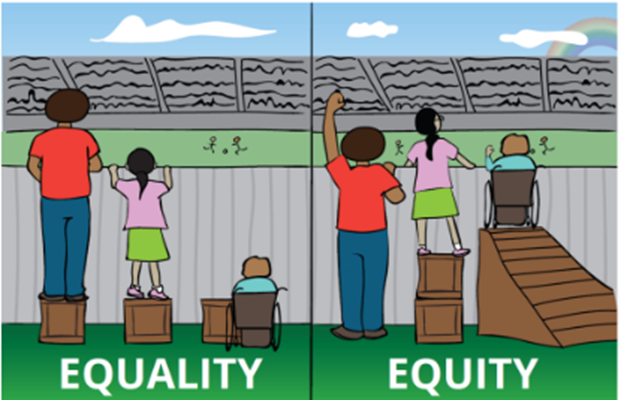
Equality vs Equity
Co-production values and principles strongly advocate equality, diversity and inclusivity so it is important to consider how you will make sure people are not restricted from taking part.
The illustration below reminds us that some people need more support than others to overcome the barriers and challenges they experience. Remember to consider issues like people’s literacy levels, their access to digital technology and their understanding of the professional language that is often used, but difficult to understand.
Related

Find out how to get involved in improving SEND services as a child or young person with SEND.
 Facebook
 X
X Email
Email WhatsApp
 Messenger