How to co-produce (SEND co-production)

How to co-produce (SEND co-production)

Details on how and why we use co-production and the benefits of this.

Benefits of co-production

Using co-production in our work benefits us in many ways, below are some examples:

  • people with lived experience set their own priorities, guiding work based on what matters to them
  • activities are more inclusive from the start, reducing barriers to services
  • it empowers individuals to use their experience in meaningful ways
  • lived experience partners are equal, balancing power and ensuring all voices are heard
  • combines diverse knowledge and skills, improving outcomes and shared learning
  • challenges assumptions, uncovering small but important issues that affect real life
  • produces practical, relevant, and impactful work that is more likely to be used effectively
  • makes better use of resources, avoiding unnecessary costs

Getting started

To get started:

  • identify what needs to change, what you want to achieve and what levels of involvement will be needed
  • be clear on the objectives of the activity, what benefits they will have for all those involved in the process and what success will look like
  • be realistic and clear, where appropriate, on what can and cannot be affected

Below is a template of how you could record your participation within your service. It helps you plan the aims of the project or piece of work and links it directly to the outcomes for Children and young people with SEND.

The document is broken down into 4 sections:

1. Before you start the project

Think about the aims of your project and the expected outcomes and impact on children and young people and your service.

2. Terms of reference

This part of the document is to be co-produced at the start of a new project with the identified working group of participants, this will help set the expectations, boundaries and aims of the group.

3. Measuring co-production

This part of the document encourages you to reflect on the success measures of co-production and whether these have been implemented within your piece of work or project.

4. At the end of the project or after project completion

This is to reflect on the project. It will get you to reflect on the impact of the project on the service, on the participants and most importantly what outcomes this has impacted for children and young people with SEND.

Documents

Useful resources and documents:

Participant mapping

A participant mapping exercise is a good way to make sure the right people are involved in decisions about your project or initiative. 

It will help you think about those who use services or currently find it difficult to access them, as well as their families and other practitioners who might also be affected.

  1. who is directly impacted by this decision?
  2. who is indirectly impacted by the decision?
  3. who is potentially impacted by the decision?
  4. whose help is needed to make the decision work?
  5. who knows about the subject?
  6. who will have an interest in the subject? (e.g. due to a past experience, links to their area of work)

This tool can be useful to map participants for a project: 

Feedback loops

Communication methods should be established which work for the individuals involved. There should be clear and effective feedback loop and cycles. This includes explaining the reasoning behind why decisions were made or why certain ideas could not be implemented. 

It is about being honest and transparent with people.

Examples:
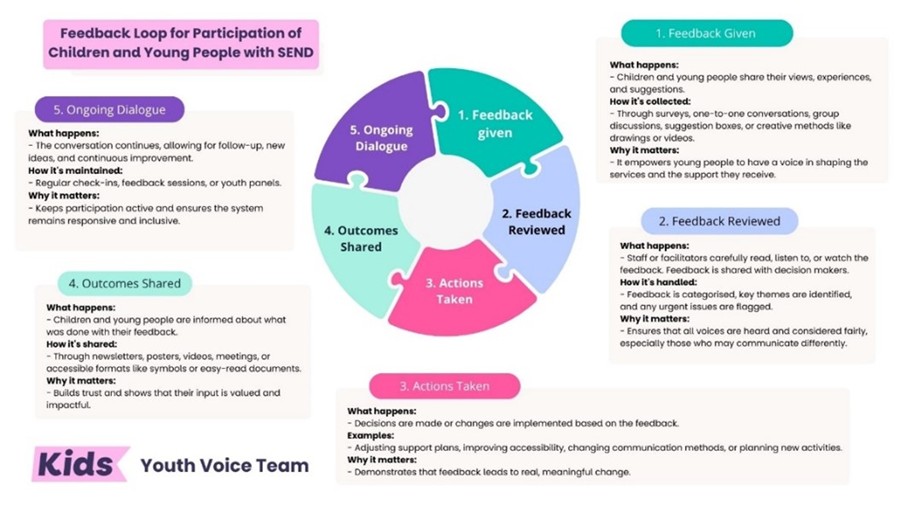
Download: Feedback Loop (PDF)

Accessibility checklist

It is important to ensure you are enabling everyone to be able to take part. Here are some things to consider:

  • keep information simple, short and free from jargon
  • offer virtual and remote options to participants
  • offer suitable timings for participants
  • offer information in different formats, e.g. written, videos, audio
  • ensure documents are accessible for all participants e.g. easy read, accessible to those with a vision impairment
  • set expectations and boundaries early
  • ensure documents or resources are sent to participants in a reasonable timeframe to allow processing of information

Annual influence and participation planning

This tool can help you identify how people will participate in each stage of your work. It'll make sure people can meaningfully influence your work at the earliest opportunity. 

Meaningful involvements need to take place on an ongoing basis.

Was this page useful?